 India
 Australia
 Bangladesh
 Brazil
 Canada
 Egypt
 Germany
 Indonesia
 Kenya
 Lebanon
 Malaysia
 Mexico
 Nepal
 Nigeria
 Pakistan
 Philippines
 Saudi Arabia
 Singapore
 South Africa
 Sri Lanka
 Thailand
 UAE
 United Kingdom
 United States
 Vietnam
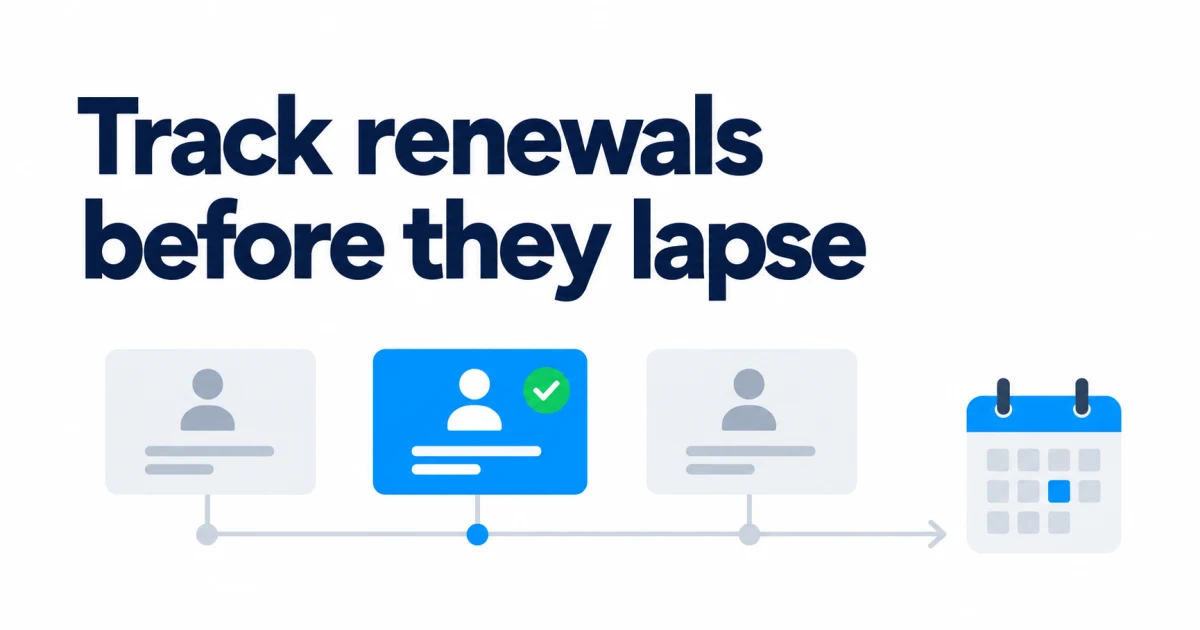
Gyms track renewals by keeping each member’s plan end date, payment status, and renewal outcome in one record, then reviewing upcoming expiries before the plan ends. A useful renewal list shows who needs a conversation, who has agreed to continue, who has paid, and who has paused or left. Attendance can help prioritize a check-in, but it should not be treated as proof that someone intends to quit.
1. Keep one current membership record per member
Record the member’s name or internal ID, plan, start date, end date, amount due, amount paid, and current status. Use an agreed status set such as active, expiring, renewed, frozen, expired, or cancelled. Define what each status means so two staff members do not classify the same member differently.
Keep a history when a plan changes. If a member switches plans or receives an approved extension, record the old end date, the new end date, the reason, and who made the change. Replacing the old value without a note makes later payment and access disputes harder to resolve.
If you use a spreadsheet, give each member a stable ID and keep the membership ledger separate from the payment ledger. If you use software, check that membership and payment records stay linked and that staff can correct errors without erasing the history.
2. Decide when a renewal becomes due for action
Choose a look-ahead window that fits your plans and staff capacity. For example, a gym might review memberships ending in the next month, with a closer check during the final week. The exact window is an operating choice, not an industry rule. A short rolling plan may need earlier contact relative to its length, while a long plan may allow more time for a conversation.
Review the list on a fixed cadence. Sort it by end date, then by whether anyone has already contacted the member. Do not let the same person receive several uncoordinated reminders from different staff members.
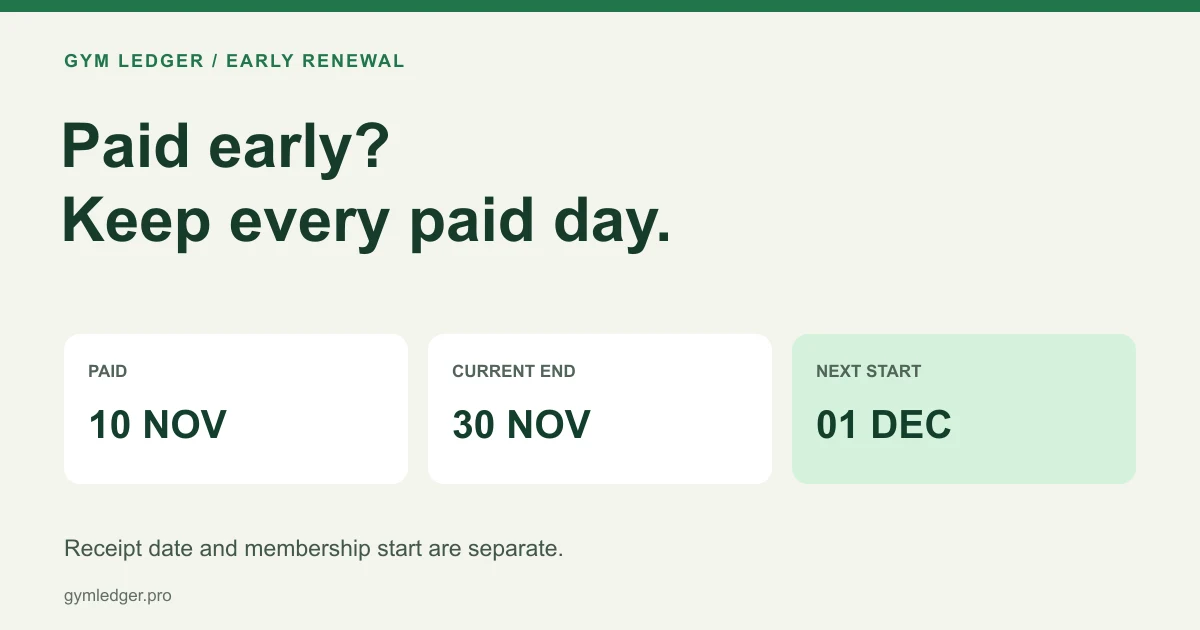
The list should distinguish a plan nearing its end from an unpaid balance. A member may have paid ahead of time, or may owe money while the current plan is still active. Those are different conversations.
3. Give each upcoming renewal an owner and next step
For every upcoming expiry, assign a staff owner and record the next action. Useful fields are the last contact date, contact channel, what the member said, the agreed follow-up date, and the staff owner. Keep sensitive personal details out of widely shared lists. A short operational note is usually enough.
The first conversation should ask whether the member wants to continue and whether anything needs attention. Check the membership terms before offering a price, extension, or freeze. If the member is unhappy with coaching, hours, cleanliness, or another service issue, address that issue rather than sending more payment reminders.
If a member’s visits have dropped, ask if their routine or circumstances changed. Attendance is a signal to check in, not a diagnosis. A missing check-in can also reflect a failed reader, an unrecorded manual entry, or another collection gap. Verify the record before acting on it.
4. Record the outcome separately from the reminder
A sent message is not a renewal. Mark a membership renewed only when the new term is agreed and the required payment or billing arrangement is recorded. Capture the new start and end dates, the plan, the amount, and any receipt or invoice reference that applies locally.
Keep other outcomes distinct: the member declined, asked for time, requested a freeze, switched plans, could not be reached, or had a payment issue. This lets the gym see whether follow-up is pending rather than treating every non-payment as a lost member.
For a freeze, use your written policy and record when it begins and ends, how it affects the membership end date, and who approved it. Refunds, recurring billing, invoices, and consumer rights depend on location and contract terms. Check the local rules that apply to your gym.
5. Reconcile the list with payments and access
At the end of each review cycle, compare renewed memberships with actual collections. Check partial payments, reversals, credits, and duplicate entries before reporting money received. A promise to pay is not cash collected.
Check that the new membership dates are reflected wherever entry access or attendance eligibility is decided. Do not assume a payment automatically updated a door reader or biometric terminal. Confirm the device or check-in workflow received the change before telling a member their access is ready.
Keep exceptions visible. If a member has paid but the plan still shows expired, assign an owner to correct it promptly. If a plan is active but payment is disputed, do not quietly change the historical payment record to make a report look tidy.
6. Review what the renewal process is telling you
Count memberships due for renewal during a defined period and record the final outcome for each. Keep pending decisions separate from completed renewals and confirmed departures. This makes the denominator understandable when you compare periods.
Look for recurring reasons people leave or pause, but do not turn a small set of notes into a universal claim about all gyms. Compare the reasons with what the gym can verify: service issues, attendance patterns, plan fit, and payment friction. Choose a specific improvement and review whether the underlying records change afterward.
Gym Ledger is gym management software that helps gym owners manage members, payments, attendance, and communication. Its renewal records can support this process, but the staff still need to resolve member concerns and confirm what happened. Before relying on any automated reminder, check its current configuration and delivery status.
For the connected workflow, read our guide to writing clear expiry reminders.
Frequently asked questions
What should a gym renewal tracker include?
Include the member ID, plan, end date, current status, amount due and paid, contact owner, last contact, next action, and final outcome. Keep detailed private notes in a restricted record.
How early should a gym contact members about renewal?
Choose a window that fits the plan length and gives members reasonable time to decide. Test the cadence with your own members and avoid repeated messages that ignore a response already received.
Is a reminder enough to count a renewal?
No. Record the agreed new term and the payment or billing arrangement. Keep reminders, promises, and completed renewals as separate events.
Can attendance data predict who will renew?
A change in visits can signal that a check-in may help, but it cannot establish intent. Confirm that attendance capture is working and ask the member directly.