 India
 Australia
 Bangladesh
 Brazil
 Canada
 Egypt
 Germany
 Indonesia
 Kenya
 Lebanon
 Malaysia
 Mexico
 Nepal
 Nigeria
 Pakistan
 Philippines
 Saudi Arabia
 Singapore
 South Africa
 Sri Lanka
 Thailand
 UAE
 United Kingdom
 United States
 Vietnam
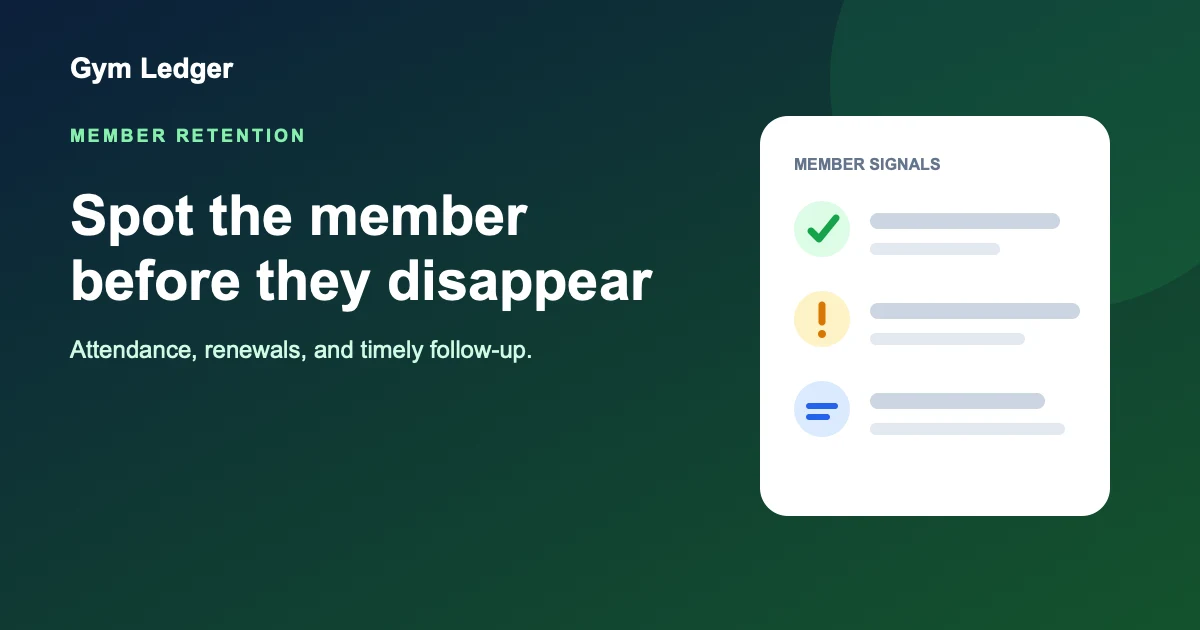
When a member stops attending, first verify the attendance record, then make one considerate check-in and agree on a useful next step. Ask what has changed rather than assuming the member is lazy, unhappy, or planning to cancel. Your job is to remove a practical obstacle where you can, while respecting their choice to pause or leave.
A missed visit is a signal, not a diagnosis. The right response depends on the member’s usual routine, recent conversations, and whether the membership is active. A return visit also does not prove the underlying problem is solved.
1. Check that the absence is real
Compare the last recorded visit with the member’s normal pattern. Someone who usually trains on weekends should not receive the same alert as someone who normally attends every weekday. Check other branches, class registers, reception corrections, planned travel, and approved freezes before contacting them.
Confirm that the check-in system was working during the period. If a terminal stopped syncing, several members may appear absent together. Fix the data problem before staff send inaccurate messages. Keep a short note such as “attendance verified against class register” so the next shift does not repeat the investigation. Use only information relevant to service, and keep sensitive explanations out of general staff notes.
2. Assign one person to make contact
Choose the staff member who already knows the member, or designate reception when there is no existing relationship. Record who will contact them and through which agreed channel. Multiple trainers sending independent messages can make a helpful check-in feel like pressure.
Keep the opening brief: “Hi, this is your gym reception team. We wanted to check whether your current training times still work for you. Is there anything we can help with?” This is sample wording, not a claim that a member said anything. Avoid guilt, body comments, or claims about lost progress. If messaging consent is missing or withdrawn, use an appropriate permitted route instead of assuming that holding a phone number is permission.
3. Understand the obstacle before offering a solution
Let the member describe the issue in their own words. They may need a different time, simpler induction, a conversation about crowding, a billing correction, or space away from training. Do not demand personal medical or family details to explain an absence.
Ask a useful follow-up: “Would a quieter session time help?” or “Would you like us to explain the pause options?” Record the operational issue and agreed action. “Needs an evening orientation appointment” is more useful than “unmotivated.” If the complaint concerns staff conduct or safety, move it to the appropriate manager and protect confidentiality. An ordinary retention message is not the right place to investigate a sensitive complaint.
4. Make the return easy to carry out
Offer a specific, realistic next step that fits the answer. That could be booking an equipment refresher, identifying a less crowded hour, introducing the member to a different coach, or explaining the membership freeze process. Check availability before promising a session or staff member.
For a member who wants to return, confirm the date, time, arrival instructions, and whom to ask for. Tell the receiving staff member only what they need to welcome the member. Avoid framing the visit as a test they must pass. Training advice should come from an appropriately qualified professional who understands the member’s situation, especially after injury or a long break.
5. Set a respectful stopping point
A member who does not respond should not receive escalating messages indefinitely. Use a modest documented follow-up approach based on consent, context, and local rules, then close the task if there is no reply. A request to stop contact should take effect across all staff and communication tools.
If the member wants to cancel, explain the applicable process clearly. Do not hide cancellation behind a compulsory sales meeting. If they request a pause, document the dates, billing effect, and access conditions. The membership pause guide explains that conversation in more detail. Retention work should help a member make an informed decision, including a decision to leave.
6. Review the result and repair recurring service problems
Close the case with an outcome such as returned, pause arranged, issue resolved, cancelled, declined contact, or no response. If the member returns, check whether the promised help actually happened. Do not count an outbound message or a read receipt as a successful return.
Review absence cases together with feedback. Repeated complaints about unavailable equipment, confusing plans, or late openings need operational changes. Give each fix an owner and a completion date. Track whether those specific complaints recur after the fix. A cleaner attendance list is useful, but the purpose of the process is a better member experience, not a more impressive contact count.
FAQ
How long should a gym wait before contacting an absent member?
Base the timing on the member’s agreed routine and the reliability of your records. There is no universal absence threshold that suits every member, plan, or gym.
Should I immediately offer a discount?
No. First understand the obstacle. A discount does not repair crowding, unclear coaching, or an unresolved billing mistake, and it may be irrelevant to the member’s decision.
What if the member does not want to explain?
Respect that choice. Offer the available practical options without demanding a personal explanation, and record only the information needed to carry out the member’s request.
How do I measure whether the follow-up helped?
Record the agreed action and actual outcome. Review completed service fixes and sustained return patterns separately from messages sent, replies received, and cancelled memberships.