 India
 Australia
 Bangladesh
 Brazil
 Canada
 Egypt
 Germany
 Indonesia
 Kenya
 Lebanon
 Malaysia
 Mexico
 Nepal
 Nigeria
 Pakistan
 Philippines
 Saudi Arabia
 Singapore
 South Africa
 Sri Lanka
 Thailand
 UAE
 United Kingdom
 United States
 Vietnam
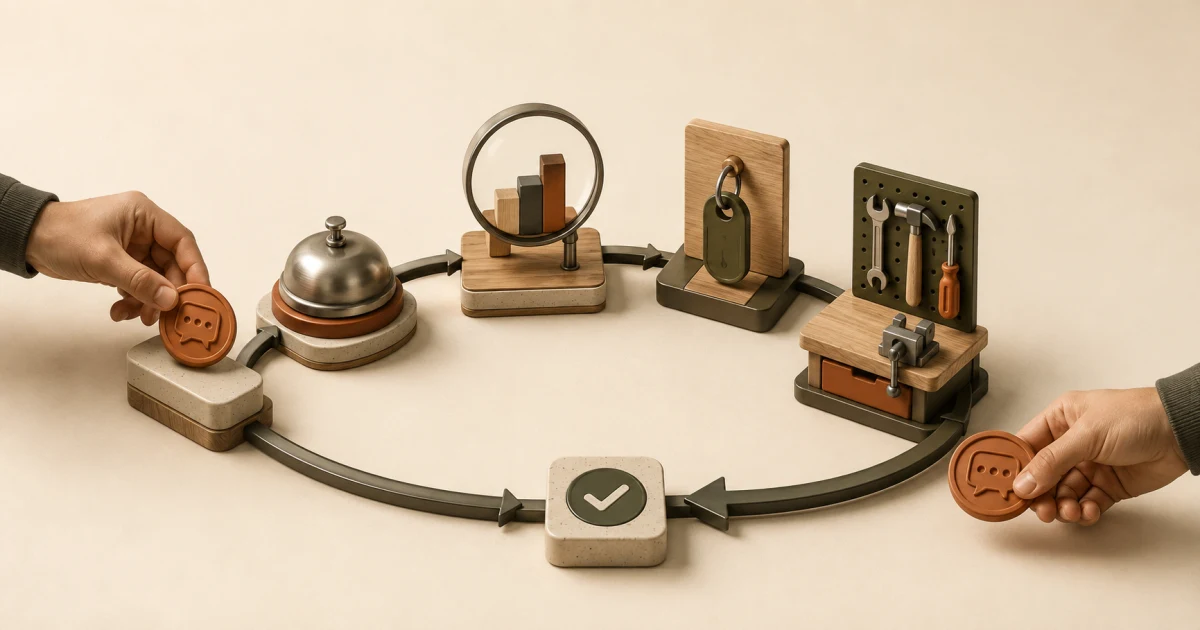
Collect gym member feedback on WhatsApp by asking a short, specific question through a permitted conversation, making it easy to respond honestly, and assigning someone to act on the answer. Explain whether the response is private or may be attributed. Asking for feedback is useful only when members can see that issues are acknowledged and handled.
1. Choose the decision the feedback will inform
Start with a concrete question about the member experience: whether the first visit was clear, whether a schedule change worked, or what makes training difficult. Avoid a long survey that mixes every possible topic without a plan for using the answers.
Write down what the gym could change based on the response. If no one can act on the information, reconsider the request. A broad satisfaction score can describe sentiment, but it may not identify the service problem. Pair a simple question with an optional explanation so members can tell you what mattered in their own words.
2. Use the right moment and contact permission
Ask after an experience the person can reasonably remember, while avoiding repeated requests about the same event. Check whether there is an unresolved complaint that deserves direct attention before sending a generic survey. A new member and a long-term member may need different questions.
For WhatsApp, follow the current Business Messaging Policy, including permission, opt-outs and applicable Platform template requirements. Do not assume that a feedback request is exempt from all messaging rules. Keep the recipient list relevant and provide a simple way to decline further optional requests.
3. Make the question neutral and easy to answer
Ask about the experience without steering people toward praise. “Was anything unclear during your first visit?” invites useful detail. “You loved our amazing service, right?” creates pressure and weak evidence. Avoid combining several questions in one sentence because the answer may refer to only one part.
Keep any rating scale consistent and explain its endpoints. Allow a text response for issues the scale misses. If you send a form link, verify that it opens on a phone and does not demand unnecessary personal details. The member feedback system guide explains how to connect questions to an action process.
4. Explain privacy honestly
A reply in an ordinary WhatsApp conversation is associated with the sender’s account, so do not describe it as anonymous. Tell members who will review responses and avoid forwarding private messages into broad staff groups. Use an appropriate separate method if genuine anonymity is necessary, and verify its actual limitations.
Collect only information needed to understand the service issue. If a response includes health, payment or other sensitive details, route it to an appropriate restricted process. Do not turn private praise into a public testimonial or screenshot without specific permission for that use. Feedback permission and marketing publication permission are different decisions.
5. Acknowledge and assign the response
Thank the member, confirm the issue you understood and explain the next step when action is needed. Assign an owner and a realistic response time. Avoid automatically promising a fix before the gym has investigated whether the request is feasible or appropriate.
Use a simple issue record with topic, date, owner, status and follow-up due date. Separate urgent safety or serious conduct concerns from ordinary suggestions and use the appropriate escalation process. A polite acknowledgement is not closure when a member is waiting for a practical answer.
6. Close the loop and look for patterns
Tell the member what changed or why the gym cannot make the requested change. Be specific without disclosing other people’s private information. If several members raised the same concern, a general service update can explain the improvement without naming complainants.
Review themes across responses, while remembering that respondents may not represent every member. Do not turn a small voluntary sample into an invented satisfaction statistic for marketing. Track the actual sample and question if you report results internally. Use the front-desk question guide to combine feedback with recurring questions observed in day-to-day service.
Keep the feedback process separate from review pressure
A private feedback request should welcome criticism. Do not route only happy members toward public reviews while making dissatisfied members feel their concerns must remain hidden. Follow the relevant review platform’s rules for any separate public review request and avoid incentives tied to a favourable rating.
Measure whether issues were resolved and whether the same problem keeps returning. A high number of survey responses is not enough if nobody owns the changes. Periodically ask staff whether they can find outstanding feedback and explain its status. The process should make the gym easier to improve and make members more confident that speaking up is worthwhile.
FAQ
Is WhatsApp feedback anonymous?
Ordinary chat replies identify the sender’s account. Do not call them anonymous; use a suitable separate method if anonymity is required.
Should I ask several feedback questions at once?
Keep the request focused and easy to complete. Use a longer survey only when there is a clear reason and a plan to use the answers.
Can I post a positive feedback screenshot?
Obtain specific permission for public use and remove unrelated private details. A private reply is not automatic permission to publish.
What should I measure in a feedback program?
Track response themes, ownership, time to resolution and recurring issues, rather than treating response volume alone as success.