You have 127 members on paper. But how many actually showed up this month? 80? 60? 40?
If you can’t answer that in under 10 seconds, you have a problem. And it’s bigger than you think.
Members who stop showing up are about to cancel. That’s not a guess. That’s a pattern every gym owner has seen. Someone comes regularly for two months, then starts missing days, then misses a week, then disappears. By the time you notice, they’ve already made up their mind.
The frustrating part? You could have caught this early. A digital gym attendance system would have flagged them the moment their visits dropped. But you didn’t have one. You had a sign-in sheet.
The Problem With Paper Sign-In Sheets
Let’s be honest about the sign-in register. It’s been the default at gyms for decades, and it’s terrible.
Members rush in, scribble something illegible, and head to the floor. Some forget to sign. Some sign on the wrong date. Some write their name so small you can’t read it. And nobody goes back to count the entries.
Even if every member signed perfectly, what would you do with that data? Flip through 30 pages to figure out how many times Rahul came this month? Count tally marks? That’s not digital attendance tracking, it’s detective work.
Paper sign-in sheets give you the illusion of tracking without any of the actual insights. You know someone signed in. You don’t know how often they come, when they last visited, or who hasn’t been in weeks.
What a Gym QR Check-In Actually Looks Like
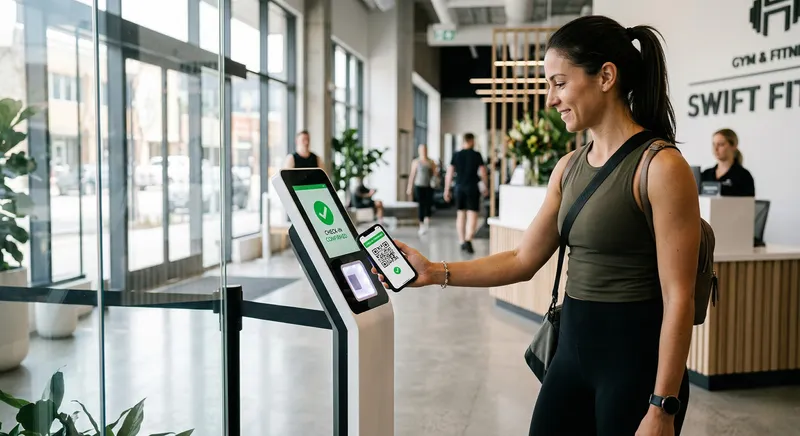
A gym QR check-in is exactly what it sounds like. You print or display a QR code at the entrance. Members scan it with their phone when they walk in. Done. That’s the entire process.
Behind the scenes, the system records who checked in, at what time, and builds a history of every visit. No handwriting. No register. No effort from your side.
The check-in takes about 5 seconds. Members open their camera, scan the code, and get a confirmation. It feels modern. It feels professional. And it gives you something the paper register never could: data.
Some systems also include a cooldown feature, so a member can’t check in twice within the same hour by accident. This keeps your attendance count accurate without you having to worry about duplicates.
The Data You Unlock With Digital Attendance
Here’s where it gets interesting. Once you start tracking attendance digitally, you unlock a layer of information that was completely invisible before.
You can see:
- Who’s coming regularly. These are your most engaged members. They’re the ones who’ll renew without a reminder. They’re also the ones who’ll refer friends.
- Who’s slowing down. A member who came 4 times a week for two months and now comes once a week is sending you a signal. Something changed. Maybe they’re bored, maybe they have an injury, maybe they’re unhappy with something. Either way, you can reach out before they cancel.
- Which days are busiest. If you know that Tuesday and Thursday evenings have 40% more check-ins, you can staff accordingly. You can also schedule popular classes during peak times and avoid scheduling maintenance during rush hours.
- Which members never show up. Some members pay every month but never come. That sounds like free money, but it’s actually a ticking time bomb. Eventually, they’ll realize they’re paying for nothing and cancel. Reaching out with a “We miss you” message can re-engage them.
None of this is possible with a paper register. All of it is automatic with a gym attendance system.
Members Who Stop Coming Are About to Quit
This deserves its own section because it’s the single most important reason to track attendance.
Industry data consistently shows that members who reduce their visit frequency are 3 to 5 times more likely to cancel in the next 30 days. It’s the strongest predictor of churn you have.
With gym attendance reports, you can set up a simple rule: if a member hasn’t visited in 7 days, flag them. Send a message. Ask how they’re doing. Offer a free personal training session. Whatever it takes to get them back through the door.
The cost of retaining a member is a fraction of the cost of acquiring a new one. And retention starts with knowing who’s coming and who isn’t.
Getting Started Takes 5 Minutes
You don’t need special hardware. You don’t need an IT team. You need a QR code and a system to read it.
With the right gym check-in software, here’s the setup:
- Create your gym profile in the app.
- Generate your check-in QR code.
- Print it or display it on a tablet at the entrance.
- Tell your members to scan when they arrive.
That’s it. From that point on, every check-in is recorded automatically. You can see attendance stats on your phone, even if you’re not at the gym.
Tie It All Together
Attendance tracking works best when it’s connected to your member management system. When you know a member’s plan is about to expire and they haven’t shown up in 10 days, that’s a strong signal to act. Pair it with automated billing, and you have a complete system that tracks who your members are, how they pay, and how often they show up.
That combination is what separates gyms that grow from gyms that struggle.
GymLedger’s QR check-in works in seconds. Members scan, you get the data. Real time attendance reports, visit frequency tracking, and inactive member alerts are all built in.
See the plans and start tracking attendance the right way.