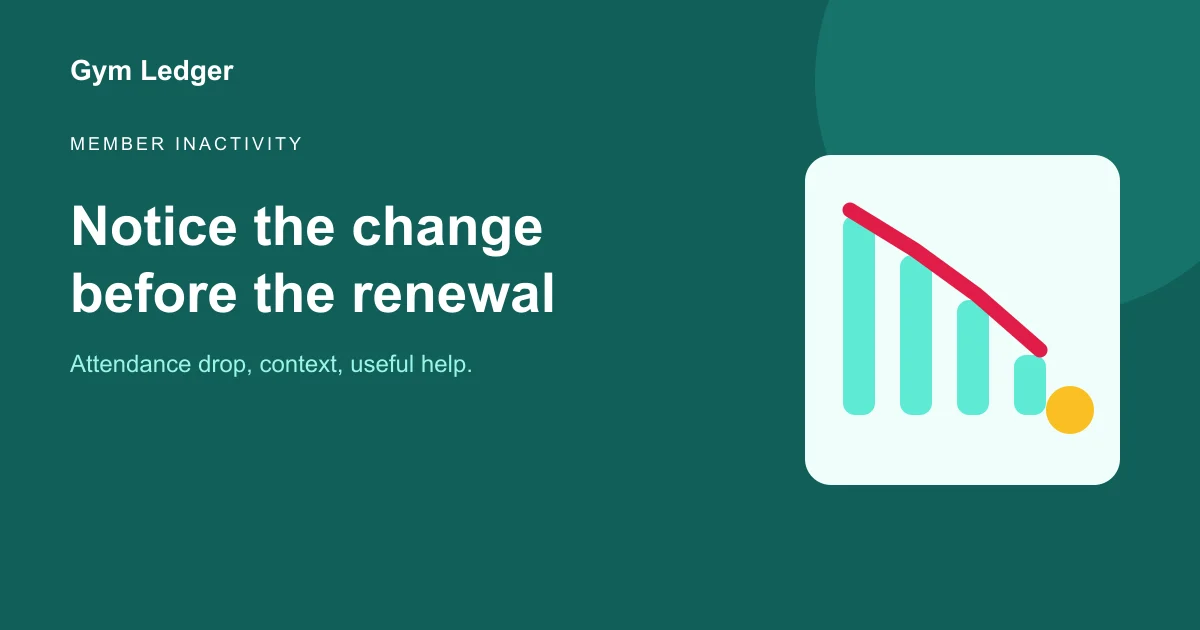
A new member visits ten times in the first month, six times in the second, and once in the third. The gym notices only when the plan approaches expiry. By then, stopping already feels normal.
Members often become inactive because schedule disruption, intimidation, unclear training, invisible progress, pain, poor experience, financial pressure, or lack of belonging goes unresolved. The gym’s best early signal is a meaningful change from the member’s own attendance pattern.
Do not treat three months as a universal rule
The “three-month drop” is a useful question, not a diagnosis. A twice-weekly member and a six-day member have different normal patterns. Compare:
- Recent visits with the person’s earlier baseline
- Planned frequency with actual frequency
- Time since last visit
- Plan status and expiry
- Known injury, travel, schedule, or freeze
- Coaching or service notes
Avoid labelling someone “at risk” from one missed week without context.
Common reasons members go quiet
The first plan was never clear
The member received an induction but still does not know what to do alone.
Progress exists but is invisible
Strength, confidence, energy, or consistency improved, but nobody helped the member recognize it.
The schedule broke
Work, study, caregiving, travel, or sleep changed. The old visit time no longer works.
The floor feels intimidating
Crowding, unfamiliar equipment, social discomfort, or fear of judgement creates avoidance.
Pain or injury was ignored
The person may stop without telling staff. Do not diagnose. Listen and direct them to appropriate qualified support.
The relationship disappeared
Attention was high during the sale and vanished after payment.
The facility disappointed
Cleanliness, maintenance, temperature, music, trainer conduct, or crowding can outweigh motivation.
Build intervention points before expiry
First visit
Confirm goal, preferred schedule, experience, safe starting route, and how to ask for help.
First week
Check whether the member completed the first intended sessions and understands the next visit.
Early pattern change
Trigger a human review when attendance drops meaningfully from baseline.
Progress review
Discuss outcomes and barriers before selling another package.
Pre-expiry
Use the complete context rather than sending the same renewal message to everyone.
How to contact an inactive member
Start with experience:
Hi Asha, we noticed your visits have been less frequent than your usual routine. Is training or timing getting difficult? If useful, we can help you adjust the plan or schedule.
Do not say the system is “watching” them, diagnose laziness, or begin with a discount. Listen for the actual barrier.
Possible next steps include:
- Simpler restart session
- New time slot
- Trainer check-in
- Program review
- Class or floor orientation
- Policy-based freeze discussion
- No action, if the member declines
Measure whether the intervention helps
Track eligible inactive members, reviewed cases, contacts attempted, replies, reason themes, agreed actions, return within a defined period, sustained return, opt-outs, and eventual renewal.
Do not claim a “saved member” because they visited once after a message. Look for an appropriate sustained outcome.
Use data with restraint
Attendance is sensitive behavioural information. Restrict access, avoid public lists, and use it to support the member rather than shame them.
Gym Ledger keeps member, plan, attendance, follow-up, and renewal context connected so the owner can notice a change before expiry. Continue with member retention software and renewal reminder timing.
Frequently asked questions
Why do gym members stop attending after a few months?
Common reasons include schedule disruption, intimidation, unclear training plans, slow or invisible progress, pain or injury, lack of belonging, poor facility experience, financial pressure, and no useful response when attendance begins to fall.
When should a gym contact an inactive member?
Use the member’s own normal pattern rather than one universal day count. Contact them after a meaningful drop while the plan is still active, and begin with their experience instead of immediately asking for renewal.
What should staff say to an inactive gym member?
Acknowledge the gap without judgement, ask whether training or schedule has become difficult, listen to the answer, and offer one relevant next step such as a plan review, easier session, schedule option, or pause discussion.