
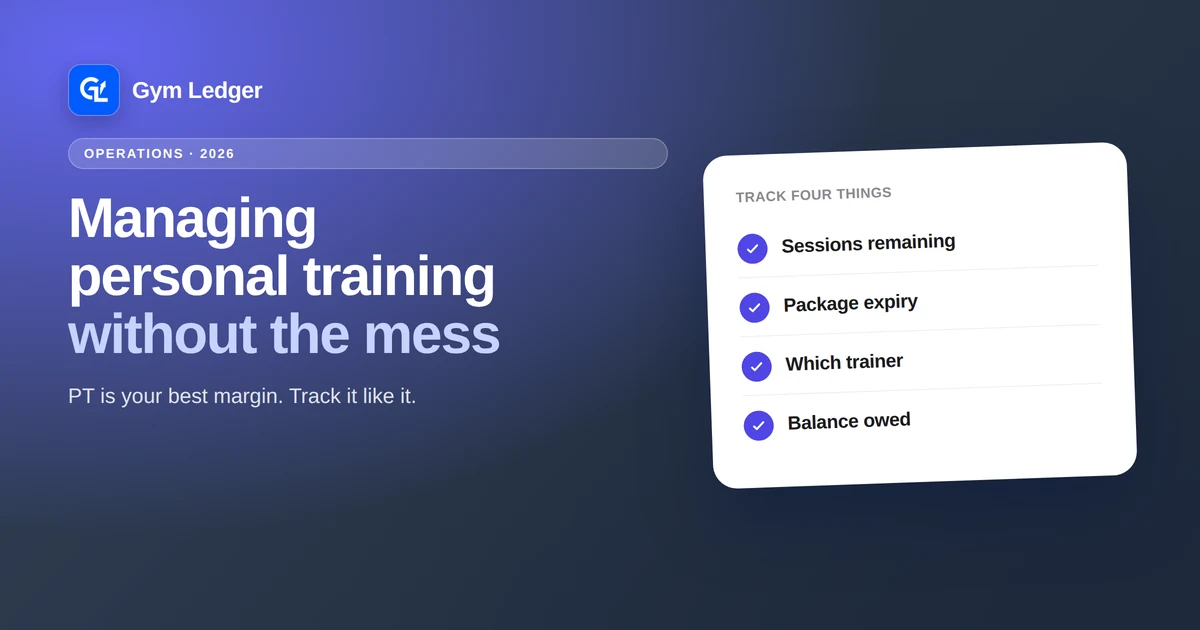
Personal training is usually the highest margin thing a gym sells and the worst tracked. A monthly membership is simple, one plan, one expiry. PT is sessions, packages, part payments, and a specific trainer attached to each one, and most gyms try to hold all of that in their head. It works right up until it does not.
The failures are small and expensive. A client swears they had three sessions left. A package quietly ran out and nobody noticed, so the sessions kept happening for free. A trainer’s payout at month end becomes an argument because the count lives in two different memories. None of these are disasters on their own. Together they leak money and trust every single month.
Membership and PT are two different clocks
The first thing to get straight is that a member’s PT and their membership are not the same subscription and do not expire together. Someone can be perfectly active on their gym membership and completely out of PT sessions, or the reverse.
Treating them as one thing is where the confusion starts. The moment you track them separately, a whole class of “wait, is he still paid up for PT” questions simply disappears.
Track four things and the mess clears up
You do not need complicated software for this. You need four numbers kept honestly for every PT client.
- Sessions remaining. Count down from the package, every session, no exceptions.
- When the PT package expires. Packages should have a date, not drift on forever.
- Which trainer. So the delivery and the payout are attached to a real person.
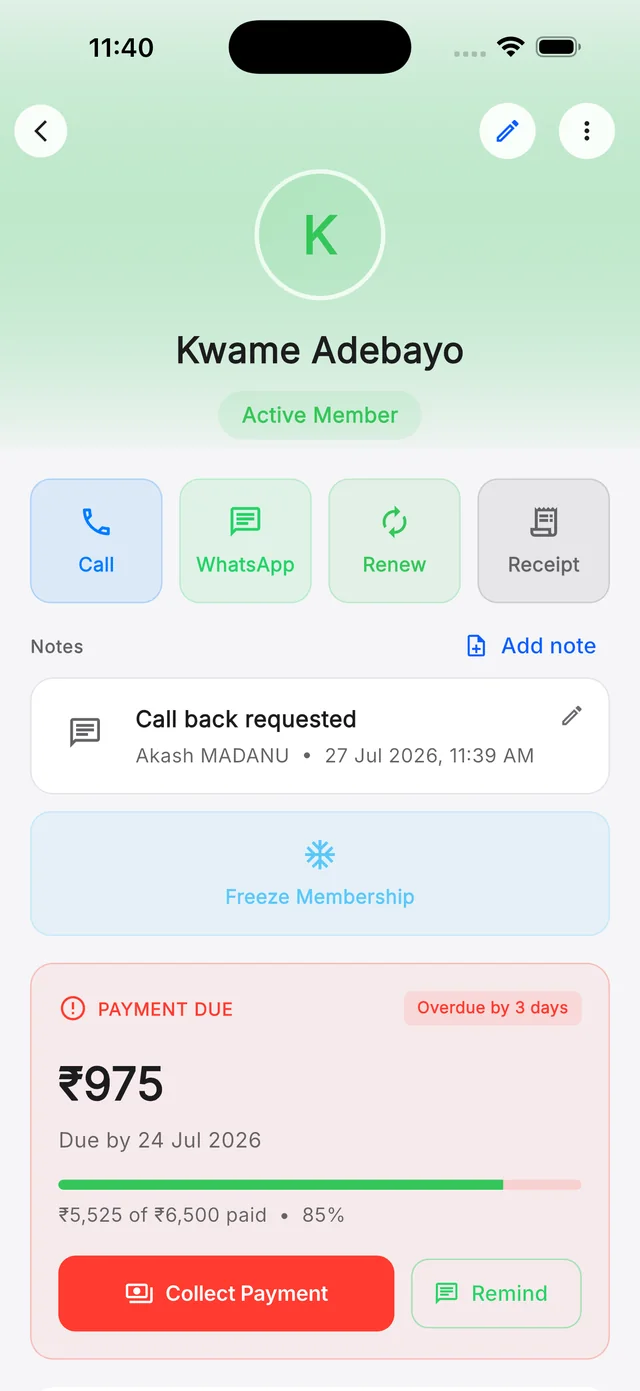
- What is still owed on it. PT is often paid in parts, and the balance is easy to lose.
The trainer angle matters more than you think
When the session count lives in your head, every payout is a negotiation, and a good trainer eventually stops trusting the number. When it lives on a screen both of you can see, the payout is just arithmetic. Trainers stay longer with owners whose numbers they can trust, and PT is the one area where losing a trainer often means losing their clients too.
Paying commission from a real, agreed count instead of a rough memory is not just cleaner. It is how you keep the people delivering your best margin.
Be honest about what this is not
One caveat, because it is easy to expect the wrong thing. Tracking PT is not the same as running a class timetable or a booking calendar. If what you need is members reserving slots for group classes through an app, that is a different tool and you should pay for one that does it well.
What most independent gyms actually need is simpler and more neglected: knowing how many sessions each client has left, when their package ends, who trains them, and what they still owe. Get that right and the fancy calendar rarely turns out to be the missing piece.
Where Gym Ledger fits
Gym Ledger keeps personal training on its own clock, separate from the membership, so a PT package has its own sessions and its own expiry and shows up before it runs out, not after. It ties the plan to a trainer and keeps the balance visible, so month end is a number you can both read rather than a conversation you both dread.
It handles members, payments, renewals, attendance, leads and reports, PT included. It is not a class booking platform, and it does not pretend to be. But if your PT is currently held together by memory and a notebook, this is the part it was built to fix.
See the plans and start with a free trial.