
Personal training revenue stalls when the gym treats it as a one-time sales push. A package is sold, sessions are loosely tracked, progress is unclear, and renewal begins only after the package has ended.
Increase personal training revenue by identifying a genuine coaching need, matching the right trainer, offering a clear package, tracking delivery and progress, reviewing the outcome, and asking for renewal before the service ends. Improve conversion and retention before adding pressure.
Define who actually benefits
Personal training may suit a member who needs:
- Safe orientation and confidence
- Technique coaching
- Structured progression
- Accountability
- Sport-specific development
- Return-to-training coordination with qualified care
- A schedule or environment that general floor access does not provide
It is not automatically necessary for every member. Staff should be allowed to recommend the basic membership when that is enough.
Use a consultation, not a disguised pitch
Understand goal, experience, schedule, preferred coaching style, relevant limitations, and budget. Avoid medical diagnosis or guaranteed transformations.
End with one of three honest outcomes:
- General membership is sufficient.
- A defined PT package is appropriate.
- The person needs qualified professional input before training.
Match trainer and member
Consider expertise, communication, availability, language, training style, and personality. The best salesperson is not automatically the best coaching match.
Record the assignment so another staff member can explain who owns the next step.
Make the package explicit
Show:
- Number and length of sessions
- Service period or expiry
- Assessment or program inclusions
- Scheduling and cancellation rule
- Trainer or reassignment policy
- Price, tax, and payment schedule
- Freeze, refund, and transfer treatment
- How progress is reviewed
Do not rely on “12 sessions” when nobody can explain validity or cancellation.
Price from contribution and capacity
Include trainer cost, commission, preparation, facility capacity, payment fees, software, tax, and target contribution.
Compare the effective session price across package sizes. A large discount can fill the calendar while reducing the value of scarce trainer hours.
Track delivery
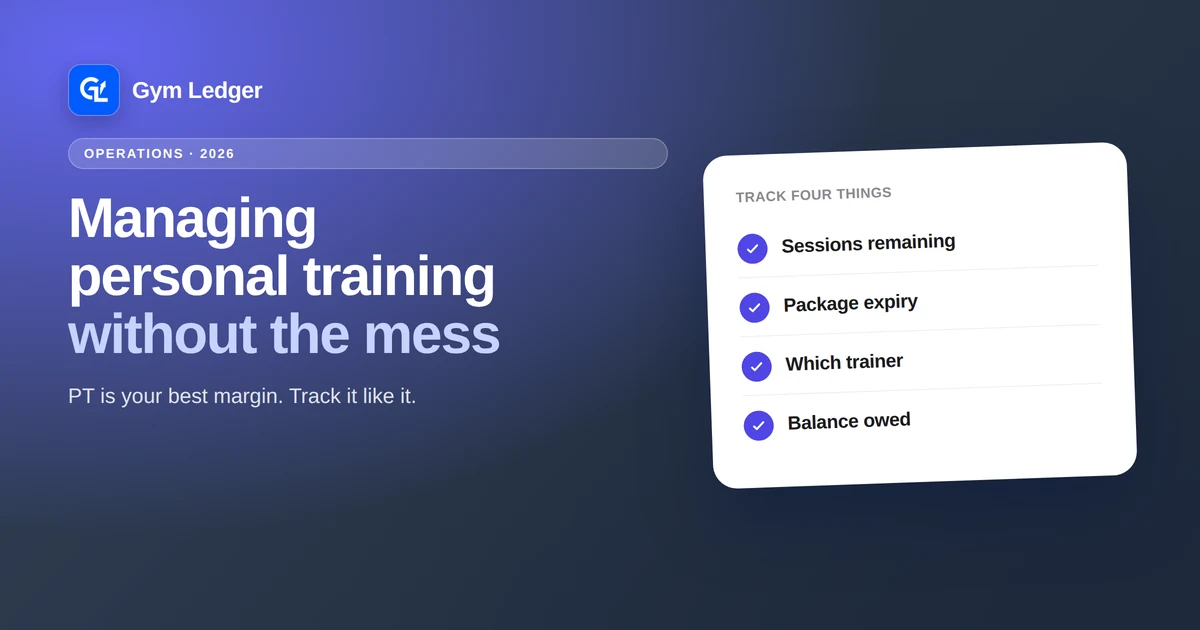
For every session record member, trainer, date, status, and package balance. Define completed, cancelled, late-cancelled, and no-show consistently.
Do not pay commission on a manually remembered total. Use the trainer commission tracking guide.
Make progress visible
Review the outcome appropriate to the goal. This may include technique, consistency, load, movement confidence, habit, or member-reported experience. Avoid reducing every person to weight loss.
The review creates value even when the plan changes. It also gives renewal a legitimate context.
Start renewal before the final session
Discuss:
- Progress made
- Remaining goal
- Member feedback
- Need for continued coaching
- Appropriate frequency
- Budget and schedule
- Whether independent training is now the better next step
Ethical off-ramping builds trust. Some members should graduate from PT rather than renew forever.
Measure the complete PT funnel
| Stage | Metric |
|---|---|
| Need identified | Qualified consultations |
| Offer | Package recommendations |
| Sale | Conversion and collected revenue |
| Delivery | Sessions delivered and utilization |
| Experience | Cancellation, complaints, satisfaction |
| Outcome | Goal-appropriate progress review |
| Continuation | Renewal, frequency change, or graduation |
Segment by trainer and package without turning one metric into punishment. Low conversion may reflect poor lead quality, while high conversion with low delivery is not success.
Gym Ledger links members, PT fees, trainer assignment, session-related records, and commission reporting so the owner can trace sale through delivery. Read managing personal training for the operating foundation and revenue streams beyond memberships for portfolio decisions.
Frequently asked questions
How can a gym increase personal training revenue?
Identify members who genuinely need coaching, explain the outcome, match the right trainer, offer a clear package, track delivery and progress, review results, and ask for renewal before the package ends. Improve conversion and retention before adding pressure.
How should a gym price personal training packages?
Price from trainer cost, commission, facility cost, preparation, session length, package size, demand, positioning, tax, and target contribution. Show the member exactly what is included and do not hide the effective session price.
Which personal training metrics should a gym track?
Track consultations, qualified recommendations, package conversion, collected revenue, sessions sold, sessions delivered, utilization, cancellation, completion, renewal, trainer capacity, refunds, commission, and member progress or satisfaction.