
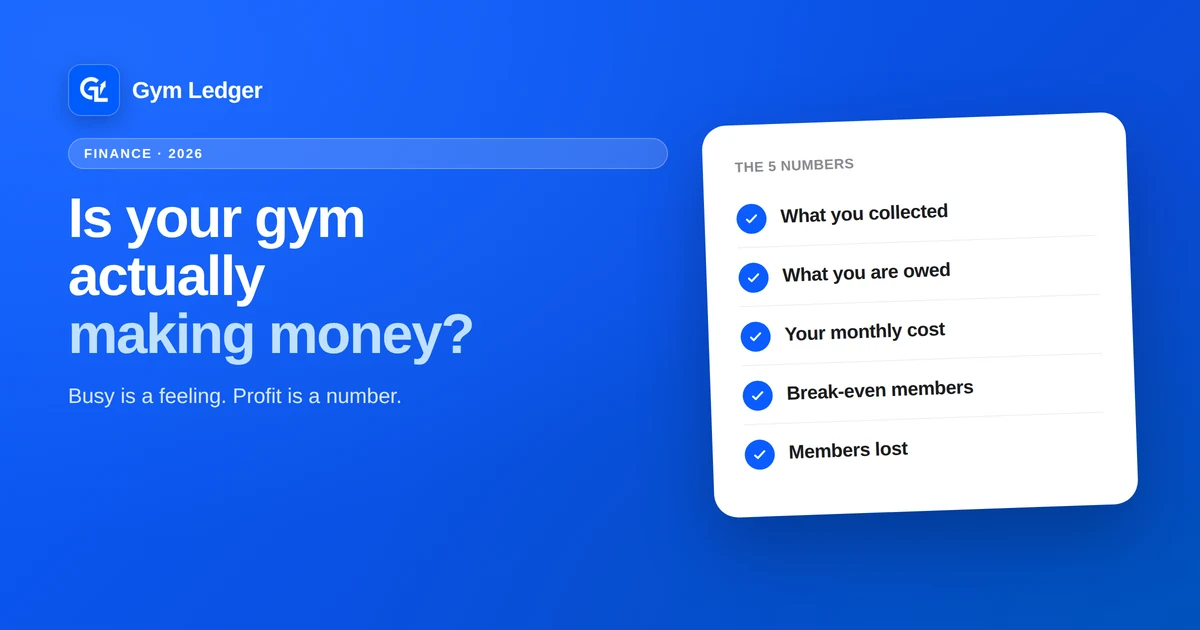
A full floor at seven in the evening feels like proof that the business is working. It is not. Busy is a feeling. Profit is a number, and the two disagree far more often than gym owners expect.
Plenty of packed gyms in India are quietly losing money, and plenty of half-full ones are comfortable. The difference is not how it feels at peak hour. It is a handful of numbers most owners never sit down and look at. Here they are.
Three words people use as if they mean the same thing
Revenue, collections, and profit are not the same, and mixing them up is how a gym convinces itself it is fine.
Revenue is what your members owe you for the month. Collections is what actually reached your hands. Profit is what is left after you pay for everything it takes to keep the doors open. You can have strong revenue, weak collections, and no profit all at the same time, and if you only ever look at revenue you will never see it coming.
The five numbers that tell the truth
You do not need an accountant to run a healthy single gym. You need to know five things, and to know them every month.
- What you actually collected this month. Money in hand, not money promised. This is the only number your landlord and your trainers care about.
- What you are still owed. Your outstanding dues. This is money you have already earned but cannot spend, and it is usually larger than owners guess.
- What it truly costs to open each month. Rent, salaries, electricity, equipment EMIs, maintenance, and yes, the software. Add it all up once and the number is sobering.
- Your break-even member count. Monthly cost divided by your average fee. Below this line you lose money, above it you make it. Most owners have never calculated it.
- How many members you lost this month. Churn is the number that decides next month before next month arrives.
The dues trap
Here is the one that catches good gyms. On paper the month looks strong, but the bank account is thin, because a big share of that “revenue” is sitting in dues you have not collected.
Chasing those dues is not admin work. It is the highest paid hour in your week, because you are not earning that money, you already earned it. You are just going and getting it before it quietly turns into a bad debt you write off.
Expenses hide in cash
Revenue tends to be visible. Costs are the ones that hide, and they hide in cash. The small repair, the cleaner, the chai, the advance you gave a trainer, the part you bought for the treadmill. None of it feels big in the moment, and none of it gets written down, so at the end of the month the profit you were sure you made has quietly leaked away and you cannot say where.
The fix is boring and it works. Record what goes out, in the moment, the same way you record what comes in. A cost you never wrote down is a cost you can never cut.
The one habit worth keeping
If you do nothing else, close every month by answering one question: what did I collect, and what did I spend. The gap between those two numbers is your business, and an owner who knows it in ten seconds makes better decisions than one who runs on a feeling.
Where Gym Ledger fits
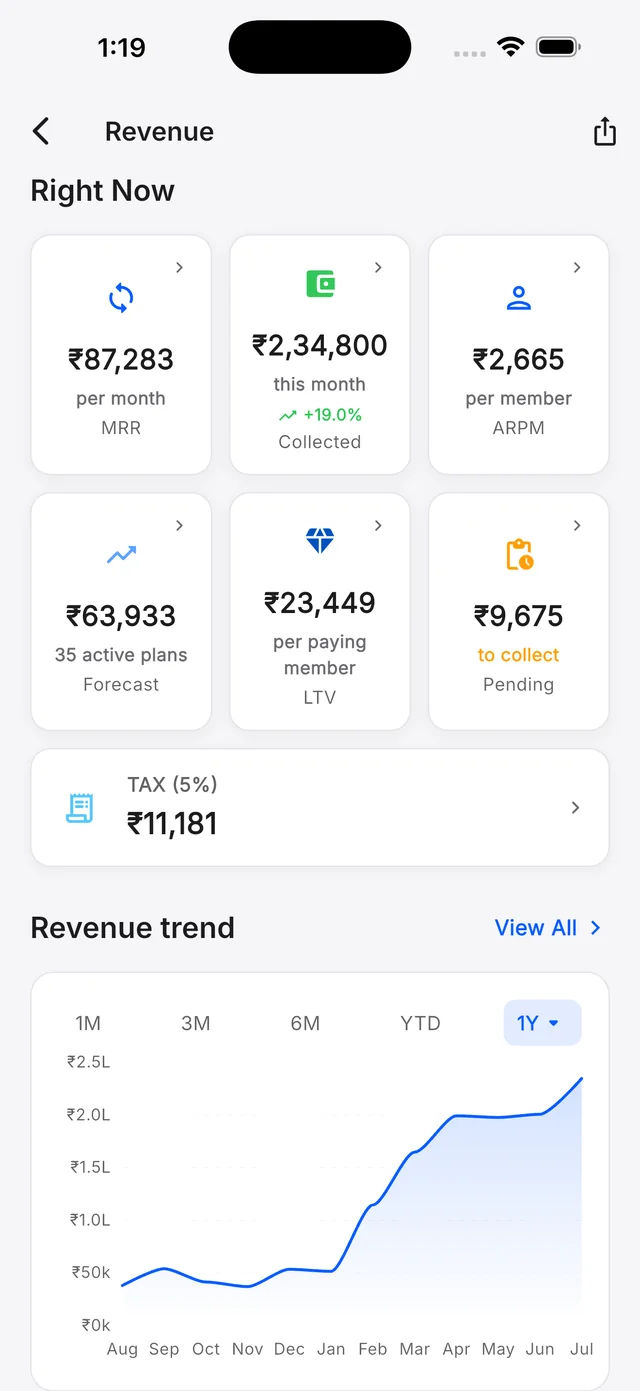
Gym Ledger is built so those numbers are not a monthly excavation. It shows what you collected, what you are still owed, and what you spent, in reports you can read without rebuilding them in Excel. Your expiring plans and pending dues sit on the first screen, so the money you already earned does not slip into a write-off.
The software itself is meant to be one of the predictable costs, not a surprising one. We price flat, per gym, not per member. Pro is ₹3,999 a year for the complete mobile app. Max is ₹5,999 a year and adds the web dashboard for a front-desk computer. Both are GST-inclusive, both include your staff, and neither charges more as your member count grows.
See the plans and start with a free trial.