
Rent leaves the bank. Cleaning is paid in cash. An equipment repair sits in a WhatsApp invoice. Software renews on the owner’s card. At month end, the gym knows collections but guesses profit.
Gym expense management means recording each cost when it happens, assigning a consistent category, keeping evidence, scheduling recurring obligations, and comparing actual spending with budget and cash availability. A monthly total alone cannot explain what changed.
Start with categories that match decisions
| Category | Common examples |
|---|---|
| Occupancy | Rent, maintenance, common-area charges |
| People | Staff salary, trainer pay, contractors |
| Utilities | Electricity, water, internet |
| Equipment | Purchase, lease, repair, service contract |
| Operations | Cleaning, laundry, consumables, software |
| Sales and marketing | Advertising, events, referral rewards |
| Professional and compliance | Accountant, legal, licences, insurance |
| Finance and tax | Bank fees, payment fees, interest, taxes |
| Member adjustments | Approved refunds and service credits |
| Owner transactions | Drawings or capital, kept separate from operating expense |
Keep categories stable long enough to compare months. A category list that changes whenever an expense feels unusual makes trend analysis impossible.
Record the transaction, not only the receipt photo
Capture:
- Date
- Amount and currency
- Category
- Description
- Supplier or counterparty where needed
- Payment mode
- Receipt or invoice attachment
- Person who recorded it
- Person who approved it, if required
- Recurring schedule link
An image without searchable fields is an archive, not an expense system.
Separate recurring and one-time costs
Recurring obligations should produce a forward calendar. Rent, salary, software, maintenance contracts, and loan payments affect cash even before the invoice arrives.
One-time equipment purchases and repairs need their own visibility. A profitable month can look terrible after a large purchase, while a cash-strained month can look profitable if the annual bill falls next week.
Budget with a variance rule
For each important category:
Variance = actual expense minus budgeted expense
Then ask whether the variance came from price, quantity, timing, or classification. “Electricity was ₹18,000 over budget” is not an answer until you know whether tariff, usage, billing period, or an equipment fault changed.
Set review thresholds appropriate to the gym. A small fixed amount can catch repeated leakage, while a percentage threshold can catch large categories.
Profit and cash flow are different
Profit measures economic performance for a period. Cash flow measures when money moves.
A yearly membership paid today brings cash now, but the gym still owes months of service. An equipment loan preserves cash today but creates future payments. A member balance may count in sales expectations but cannot pay rent until collected.
Maintain a rolling cash view:
- Opening bank and cash balance
- Expected member collections
- Confirmed recurring outflows
- Payroll dates
- Tax dates
- Loan or lease payments
- Planned equipment spend
- Minimum operating buffer
Close the month with evidence
- Reconcile bank and cash payments.
- Find receipts and missing transactions.
- Review uncategorized costs.
- Confirm recurring expenses occurred once.
- Compare category totals with budget.
- Separate owner drawings and capital.
- Review revenue, expenses, profit, and cash together.
- Export the transaction list for the accountant.
Do not wait until tax filing to discover three months of uncategorized spending.
Protect sensitive data
Expense access can reveal salaries, vendors, bank details, and business strategy. Give staff only the permissions needed to record or manage expenses, and keep payroll in a more restricted store when reception staff can view the general expense ledger.
How Gym Ledger supports expenses
Gym Ledger records expenses by date and category, supports receipts and recurring schedules, and includes expense reporting alongside revenue. Staff expense permission is distinct, and salary information is not stored as an ordinary front-desk-readable expense.
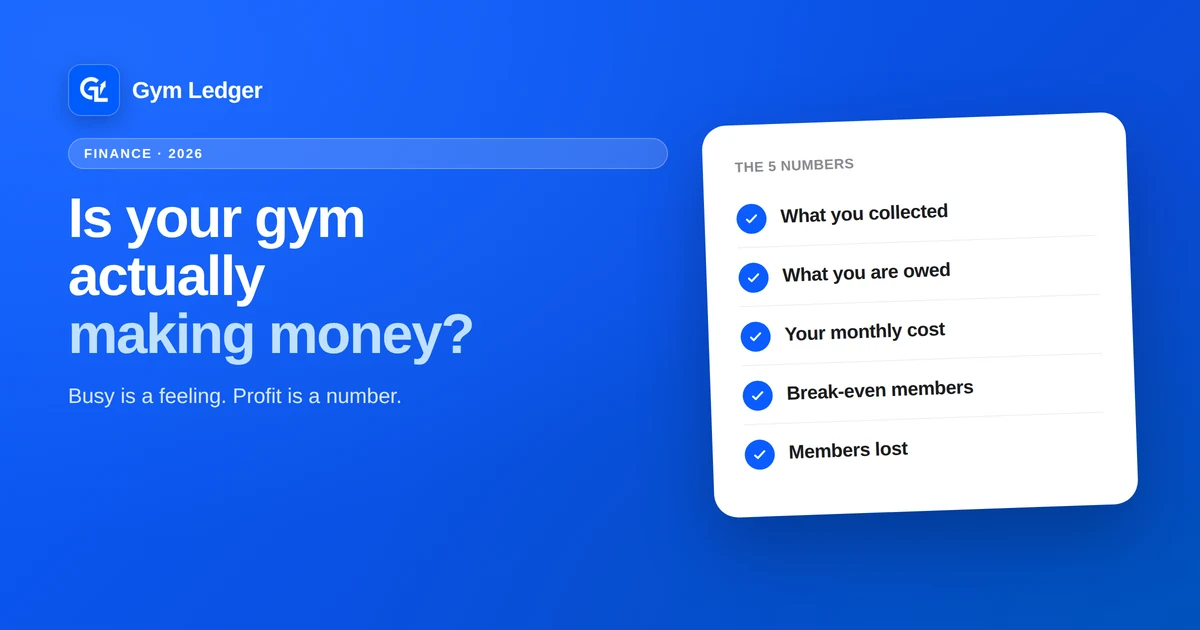
For the revenue side of the equation, read is your gym actually making money?. For return on software, use the gym management software ROI guide.
Frequently asked questions
What expenses should a gym track?
Track rent, salaries, trainer pay, electricity, maintenance, cleaning, software, payment fees, marketing, professional fees, licences, insurance, equipment purchases, finance costs, taxes, refunds, and owner withdrawals in clearly separated categories.
How often should a gym review expenses?
Record expenses when they happen, review cash commitments weekly, and close the categories monthly against bank records and receipts. Quarterly review is too late for a recurring cost that has already drifted for three months.
What is the difference between profit and cash flow?
Profit compares revenue earned with expenses for a period. Cash flow tracks when money actually enters and leaves the bank or cash box. A gym can be profitable on paper and still struggle to pay rent because collections arrive later.