Every demo can add a member. The useful comparison begins when the member pays partly, freezes, checks in at the wrong time, asks for a correction, and needs a receipt six months later.
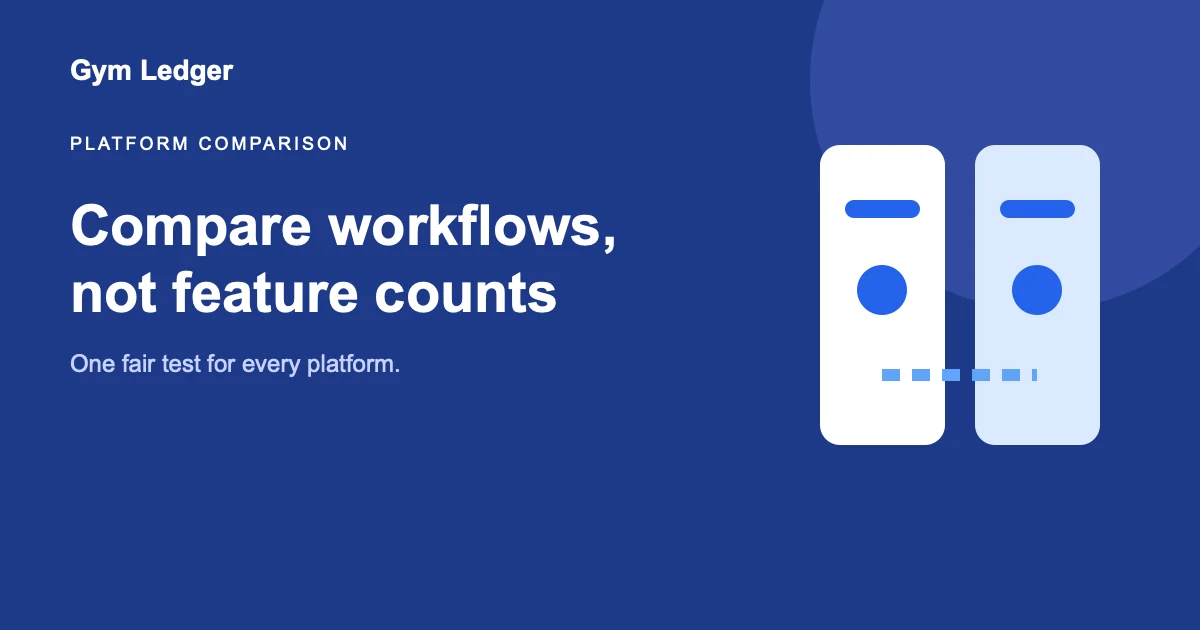
Compare gym management platforms by running the same real workflows, exceptions, roles, and exports in each product. A side-by-side feature checklist cannot reveal correctness, effort, data ownership, or support quality.
The short answer: Write your test before attending demos, score evidence instead of promises, and let actual staff use the finalists.
Step 1: define non-negotiable outcomes
List the decisions and tasks the system must support. For most gyms, these include member status, payments and dues, renewals, attendance, leads, staff permissions, reports, and exports. Add booking, coaching, access, retail, or branches only when they are genuine requirements.
Separate requirements into must have now, likely within twelve months, and optional. This protects the comparison from impressive but irrelevant functions.
Step 2: build one shared trial script
Use identical sample data and perform:
- New member with discount and partial payment.
- Receipt, correction, and remaining balance.
- Freeze, renewal, and expiry follow-up.
- Valid and invalid attendance.
- Lead handoff and conversion.
- Restricted receptionist and trainer roles.
- Monthly report and complete export.
- Account recovery and support request.
Record clicks, confusion, errors, missing data, and whether vendor help was required.
Step 3: compare total operating cost
Include subscription, member or staff limits, transactions, messages, hardware, setup, migration, training, integrations, support, tax, and internal time. Pricing that appears low can become expensive when an essential workflow needs another tool.
Our gym software cost guide provides a fuller worksheet.
Step 4: inspect the exit before entry
Export members, memberships, payments, receipts, attendance, leads, staff, and reports during the trial. Check file structure and attachments. Ask how deletion works, what remains after cancellation, and how long retrieval is available.
Also read the privacy and security terms. Data ownership is not proven by an export button if the file lacks identifiers or financial history.
Step 5: score the right categories
| Category | Suggested weight |
|---|---|
| Core workflow correctness | 30% |
| Staff and member usability | 20% |
| Security and permissions | 15% |
| Reporting and exports | 10% |
| Migration and support | 10% |
| Reliability and integrations | 10% |
| Total cost | 5% |
Change the weights for your business, but agree before seeing the scores. A missing must-have should disqualify a platform rather than disappear inside an average.
Common comparison mistakes
Avoid choosing on brand familiarity, one owner review, the number of menu items, a temporary discount, or a demo run entirely by sales. Do not let a hypothetical future branch outweigh current operations unless there is a funded plan and timeline.
Gym Ledger should be judged the same way. It focuses on core gym operations and has clear boundaries around booking, multi-branch, inventory, member payment processing, and wearables. Fit matters more than claiming a universal winner.
Frequently asked questions
How should I compare gym management platforms?
Compare the same real workflows in every product, then score correctness, staff effort, member experience, permissions, exports, migration, support, reliability, and total cost.
Should I choose gym software with the most features?
No. Choose the smallest system that handles your essential workflows and foreseeable requirements well. Extra features can increase complexity without adding operational value.
How long should a gym software trial be?
Long enough to complete a normal operating cycle, including joining, payment, attendance, renewal, reporting, staff handoff, correction, and export. Use the available trial time deliberately.
What is the biggest mistake when comparing gym software?
Comparing marketing checklists instead of completing the same end-to-end tasks with real staff and representative data.